Tree Condition
Assess canopy, leaves, trunk and overall tree condition.
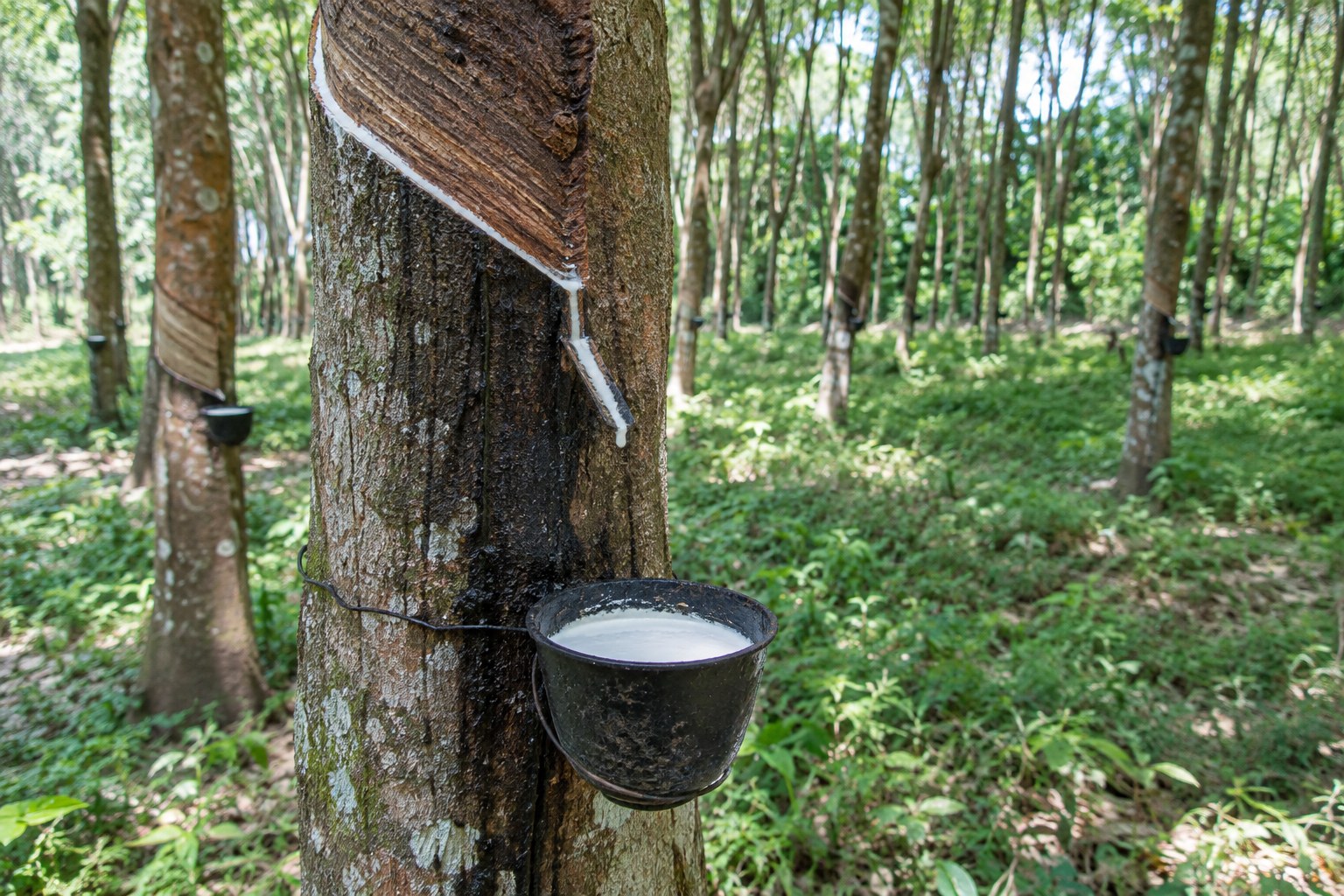
J.KAY approaches rubber management as a whole-tree system. We do not focus only on latex output, but also consider tree condition, bark condition, tapping-panel status, tapping cuts, tapping frequency and previous management practices.
Tree • Bark • Tapping Panel • Tapping Cut • Tapping Management • Follow-Up
FIELD ASSESSMENT
Visible symptoms may result from several interacting factors. Assessment should connect field conditions, soil, roots, plants and management history.
Assess canopy, leaves, trunk and overall tree condition.
Consider whether the tree is appropriate for the current tapping system and workload.
Inspect bark thickness, softness, dryness, hardness and abnormal characteristics.
Assess surface condition, uniformity and accumulated damage.
Review depth, continuity, tapping line and wound characteristics.
Evaluate whether tapping intervals are appropriate for tree condition and weather.
Consider rainfall, humidity and wet conditions around the tapping panel.
Monitor the condition of previously tapped bark and readiness for continued management.
Inspect bruising, wounds, bark damage or symptoms requiring further assessment.
Review tapping frequency, latex stimulants, tapping-panel products and previous management practices.
J.KAY DIAGNOSTIC APPROACH
A structured process helps separate evidence from assumptions.
Clearly identify the problem, timing and distribution.
Compare normal and affected areas while assessing soil, water, roots and plants.
Avoid conclusions based on one visible symptom or a product name.
Measure or collect additional samples when needed.
Define objectives, comparison areas and follow-up indicators.
Address major constraints first, then monitor real field changes.
SYSTEM VIEW
The primary constraint may sit below ground, in the plant structure, or in field management.
Overall tree condition, canopy, leaves and general strength.
Thickness, softness, flexibility and condition of the bark in the tapping area.
Tapping line, cut depth, wound condition, moisture and panel recovery.
PRODUCTS AS PART OF THE SYSTEM
Not every product is required in every field. Selection should depend on the problem, objective and actual site conditions.
FIELD PROJECT / MANAGEMENT FOCUS
Prepare and care for the tree and tapping panel before focusing on stimulation: assess → check panel → review tapping → manage → follow up.
Assess → Diagnose → Plan → Trial → Follow Up → Refine
DEVELOPMENT PATH
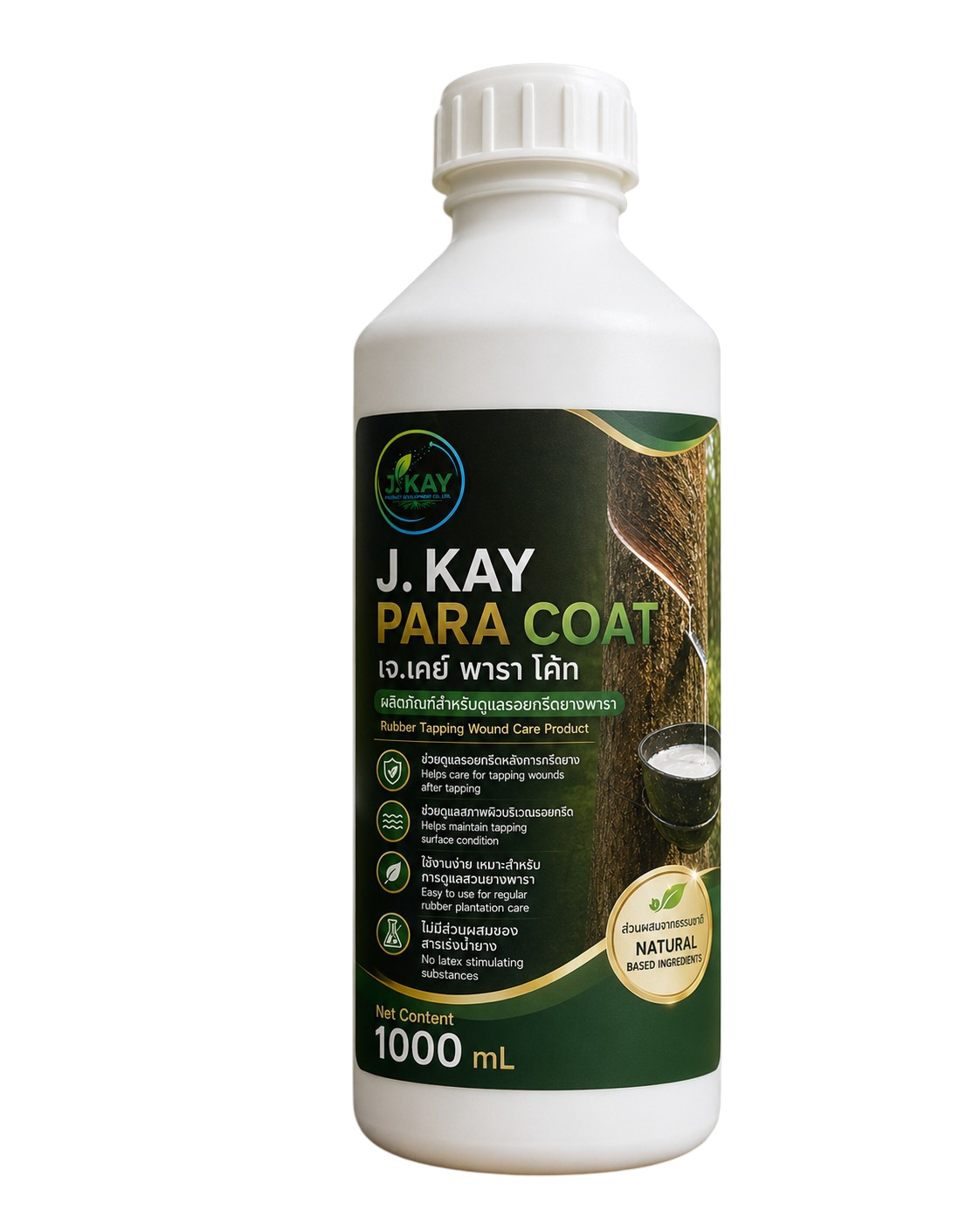
J.KAY Para Coat contains Polymer + Chitosan + Plant Extracts and is designed for tapping-panel and tapping-cut care. It forms a thin transparent coating and contains no latex stimulant. Approximate coverage: 1 litre for 500–800 trees.
CONSULTATION
Tree Age • Tapping System • Tapping Frequency • Bark Condition • Tapping-Panel Photos • Previous Product or Stimulant Use